Merry Meltdown - Workers in Wonderland on Euromaxx, Deutsche Welle
Showing posts with label Food/Drink. Show all posts
Showing posts with label Food/Drink. Show all posts
Thursday, December 13, 2012
Wednesday, November 14, 2012
Bonté

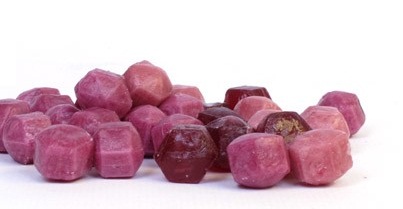
Earlier this morning, after going to the US Consulate to have an interview for my Visa, I went in to Smith & Caughey's for a browse. Their specialty food section is amazing; I want everything! I bought a tin of Bonté candies; little and gemstone shaped, they are naturally flavoured with raspberry, cherry, and blueberry. I can't seem to find much information about the company on the internet, in English at least, but the confectionery company began in 1860, in Nantes, France. Cute and pink, they are the perfect hit of sugar for an early morning start. There are heaps of other flavours available like violet, hibiscus, rose, strawberry basil, cherry blossom, poppy, citrus segments, and sea salt caramel.

Tuesday, November 13, 2012
Coffee Culture
Coffee Culture on Euromaxx, Deutsche Welle
'Cimbali is the world's leading manufacturer of espresso machines. It's MUMAC museum near Milan is devoted to the daily Italian ritual of drinking coffee. On show are 200 machines by various manufacturers and a display that gives visitors insight into 100 years of technology, design and the culture of brewing a perfect espresso.'
Friday, October 26, 2012
Italian Food
Kind of hate and kind of love this children's poem by Shel Silverstein.
Italian Food
Oh, how I love Italian food.
I eat it all the time,
Not just 'cause how good it tastes
But 'cause how good it rhymes.
Minestrone, cannelloni,
Macaroni, rigatoni,
Spaghettini, scallopini,
Escarole, braciole,
Insalata, cremolata, manicotti,
Marinara, carbonara,
Shrimp francese, Bolognese,
Ravioli, mostaccioli,
Mozzarella, tagliatelle,
Fried zucchini, rollatini,
Fettuccine, green linguine,
Tortellini, Tetrazzini,
Oops—I think I split my jeani.
- Shel Silverstein
Thursday, October 25, 2012
Miniature Food
French designer Stéfanie Kilgast's miniature food featured on Euromaxx, Deutsche Welle
Thursday, October 11, 2012
Rome tourists face €500 fine for snacking

Audrey Hepburn eating ice cream on the Spanish Steps in Roman Holiday
Rome tourists face €500 fine for snacking
By Nick Squires, Rome
2 October 2012
Eating a gelato on the Spanish Steps may be at the top of a list of things to do for many visitors to Rome, but it could land them with a €500 (£400) fine from today.
Visitors who want to emulate Audrey Hepburn in the classic film Roman Holiday will be slapped with hefty fines under a new law adopted by the city's council.
Under the law, tourists are prohibited from eating pizza, sandwiches, panini or any other snacks around many of the monuments and architectural treasures in the 'centro storico' or historic centre of the Eternal City.
They include the marble fountains of Piazza Navona, which is thronged with cafés, restaurants and street artists, as well as the stone walls which surround the Pantheon, a former Roman temple converted into a church, and Via dei Fori Imperiali, the broad approach to the Colosseum, the ancient Roman arena where gladiators once fought.
Fines will range from 25 euros up to 500 euros, in what one Italian newspaper, La Repubblica, described as a war against the sandwich.
"It is forbidden to encamp or erect makeshift shelters and stop to eat or drink in zones which have a particular historic or architectural value," reads the ordinance adopted by Rome city council.
The law is intended to "guarantee the protection of areas of merit in the historic centre." Similar bans have been adopted in Venice, where eating snacks on the street is prohibited in St Mark's Square, as well as Florence and Bologna.
"This is a way to re-educate people about how to behave in this city. We've let standards fall," said Viviana Di Capua, from an association of residents who live in the historic centre.
"At the moment people can do anything they like in this city. We need to restore respect. It's just a first step – a lot more needs to be done," she said.
She called for a crackdown on drinking alcohol in Rome's cobbled streets and piazzas, while other campaigners said they wanted to see an end to the pub crawls that have become popular with young foreign tourists, particularly Britons, Americans and Australians.
Article from The Telegraph
Wednesday, October 10, 2012
San Pellegrino

San Pellegrino is exported all over the world from Italy. The company was founded in 1899, but it wasn't until 1932 that Enzio Granelli first mixed orange juice with the famous sparkling water; creating the aranciata. In the same year, the new flavoured San Pellegrino drinks were launched in their now famous clavetta glass bottles, with a rounded base and glass which imitated the lightly textured peel of oranges. A popular variation of the drink is gassosa e vino, a combination of lemon San Pellegrino and red wine. Delicious! After trying spritzers with both white and red wine recently, and thoroughly enjoying it, I will have to track down some San Pellegrino in New Zealand and try this out too.


Figliole e fritelle, più se ne fanno, più vengono belle
'Figliole e fritelle, più se ne fanno, più vengono belle.'
'Little girls and pancakes, the more you cook the better they look.'
- Italian proverb
Tuesday, October 9, 2012
A Tuna Recipe from Madeira
A Tuna Recipe from Madeira on Euromaxx a la carte, Deutsche Welle
'We travel to the island of Madeira for this week's Euromaxx à la carte. The head chef at the Dona Juana Rabo-de-Peixe restaurant is Hugo Filipe Faria and he prepares this typical local dish for us.'
Saturday, October 6, 2012
Blue Honey

French apiarist Andre Frieh holds a sample of normal honey besides a blue colored one at his home in Ribeauville near Colmar, Eastern France.
I came across an article about 'blue honey' on Corriere della Sera, but my Italian is far too terrible to be able to translate it properly, so here is an article from Time about it.
French Bees Produce Blue Honey
5 October 2012
Mars Incorporated has proclaimed that “Chocolate is better in color” with its M&Ms. But French beekeepers may beg to differ on that.
Since August, beekeepers near the town of Ribeauville, in the northeastern region of Alsace, have been reporting their bees are producing blue and green honey, according to Reuters. And they’ve traced the cause back to a biogas plant that processes waste from an M&Ms factory.
Bees are apparently picking up vibrantly colored, sugary waste from the plant, operated by the company Agrivalor some 2.5 miles away from their apiaries. A statement from Agrivalor that appeared in the French newspaper Le Monde said the company would clean its containers and store waste in airtight containers to prevent bees from reaching it.
“We quickly put in place a procedure to stop it,” Philippe Meinrad, co-manager of Agrivalor, told Reuters.
France generates 18,330 tons of honey per year, making it one of the largest honey producers in the European Union. In Alsace alone, about 2,400 beekeepers manage 35,000 colonies, which produce about 1,000 tons of the stuff per year. However, France hasn’t been spared by the largely unexplained decrease in the world bee population in recent years, Reuters reported.
Gill Maclean, a spokesperson for the British Beekeepers’ Association, told the BBC that the harsh winter of 2011-2012 may have affected bees’ ability to forage. This could be a reason why the bees sought out the alternate sugar.
“Bees are clever enough to know where the best sources of sugar are, if there are no others available,” Maclean told the BBC.
Rest assured: Consumers won’t see blue honey on store shelves anytime soon. Alain Frieh, president of the apiculturists’ union, told Reuters the only similarity between regular honey and their bees’ M&M-tainted byproducts might be taste.
“For me, it’s not honey,” Frieh told Reuters. “It’s not sellable.”
Wednesday, October 3, 2012
Traditional Bouillabaisse
Traditional Bouillabaisse featured on Euromaxx a la carte on Deutsche Welle
'We scoured Cannes on the French Riviera for a restaurant specializing in authentic Provencal cuisine, and found it near the old harbour, at Le Caveau 30.'
Thursday, September 27, 2012
Gelati

Carpigiani van at a fairground in Bologna, Italy, 1958
There is a new museum just out of the city of Bologna, Italy, in Anzola dell'Emilia, dedicated to gelati, the Italian ice cream. The museum is at the headquarters of Carpigiani, the world-popular gelato machine which was founded in Bologna in 1946. The origin of gelati as we know it today, is said to be traced back to the Medici; Cosimo Ruggieri, and alchemist and astrologer to Caterina de' Medici in the 16th Century. The free museum features and tells the tale of many histories and stories of the delicious dessert. One day I will visit!

A gelatiere hands a cone to a child in Cannes, France, 1926

Carpigiani promotional campaign, 1960s, Italy

Children waiting at an ice-cream van in 1960s England

A woman serving ice-cream in 1950s Germany

A 1960s Italian gelateria with Carpigiani Singola soft serve machine

Gelato artisans stand next to a large batch freezer in their shop in Vienna, Austria, in 1906
Monday, September 10, 2012
Italian Dish: Pappa al Pomodoro
Italian Dish: Pappa al Pomodoro on Euromaxx, Deutsche Welle
'Chef Giovanna Iorio of the Alle Murate restaurant in Florence shows us how she prepares a very simple but nutritious dish called "Pappa al pomodoro", the ingredients of which are mainly tomatoes, stale bread and vegetables.'
Saturday, September 1, 2012
Campari

Campari, a bitters, was invented in 1860 by Gaspare Campari in Novara,
Italia, who dyed it with carmine from crushed cochineal insects. Sesto
San Giovanni saw the first production plant of the drink in 1904, and
Gaspare's son, Davide Campari, began to export the drink overseas. Campari is an alcoholic aperitif made from herbs and fruit such as
chinotto and cascarilla, infused in alcohol and water. Mixed with soda,
wine, or citrus juice, it is used in cocktails
Campari Soda is a popular drink in Italy, with a distinctive bottle designed by Futurist artist Fortunato Depero. Depero had initially stated he would reinvent the whole universe, but, needless to say, he is yet to have achieved this. The iconic Campari Soda was first launched in 1932 in a cone-shaped bottle like an upturned drinking glass. Campari Soda is product that mixes Campari with soda, and has a 10% alcohol level.
For the 80th anniversary of Campari Soda earlier this year, Matteo Ragni, an architect and designer from Milano, redesigned the cone-shaped bottle, a contemporary tribute to the original.

Fortunato Depero's original sketch for the bottle design


Matteo Regni's sketch for the 80th anniversary bottle design

Thursday, August 30, 2012
Biscotti
Biscotti, to the Italians, are just any type of biscuit. But to many in the English-speaking countries, biscotti is what we name cantuccini or biscotti di Prato. The biscuits which originate from the city of Prato are twice-baked to give them a dry crunchiness.
The term biscotto has its roots in the Latin word biscoctus, 'twice-cooked', which was used to describe food that had been baked twice; allowing dryness and long periods of storage. The Roman Legions used this method of preservation with their breads; it was useful especially for travelling.
The first documented recipe for biscotti was discovered by Amadio Baldanzi in the 18th Century. The centuries-old manuscript names the biscuits as being of Genoa. The traditional recipe lists flour, sugar, eggs, pine nuts, and almonds (unroasted, unskinned) and without yeast or fat (butter, oil, milk) The dry dough is cooked firstly in a slab, and then after being sliced, baked a second time to give it its hardness. As they are so dry, biscotti are traditionally served with a drink, in which they can be dipped. In Italy they are generally served with wine after dinner as a dessert.
Nowadays, there are many variations on the traditional recipe, new versions often include fruit or flavourings, other nuts or chocolate. In a diversion from the way they are traditionally made and served, I love to add lots of citrus peel and dried cranberries into the biscotti I make, with orange juice for a subtle flavour. And to the probable bafflement/horror of Italians, I dunk them in a hot chocolate or a tea. So delicious. I never had the pleasure of trying an authentic cantuccini while I was in Italy, but I will definitely add that to the list of things to try next time!
Thursday, August 16, 2012
Confetti
Confetti, to us in the English-speaking world, refers to the tiny pieces of colourful paper or metallic plastic used in celebrations. However, to the Italians, confetti are actually almonds (or another nut) coated in a hard layer of sugar and gifted as a present on celebratory days such as baptisms, weddings, and anniversaries. There are traditional meanings attributed to the colours; blue or pink for baptism, red for birthdays and graduations, green for engagement, white for marriage, and a myriad of colours for anniversaries.
What we know as paper confetti, is called coriandolo to the Italians; hinting that perhaps coriander seeds, representative of fertility, were once sugar-coated, and later replaced with almonds. Originally, confetti were created by apothecaries who layered sugar syrups around the nuts to form a hard coating. They were for a time passed around as digestivo after dinner parties, and then used as a party favour in the medieval times. The name confetti originates from confit or confiture. The original confetti are sometimes referred to as 'Jordan almonds' or dragée.
The English tradition of throwing paper confetti at weddings is said to have been started by Ven. Thomas Dealty in the latter part of the 19th Century. Dealty was the rector of St. Mary's Church in Swillington, and had previously held post as Archdeacon of Madras, where he had seen the rice throwing at Hindu weddings.
It's fascinating to see the links that the English language has with other languages; the words we have borrowed or stolen, and what meanings have changed in the adaption and translation of them.
Saturday, August 11, 2012
Groceries

The 21 January 2011 edition of Il Venerdì di Repubblica magazine reported the average monthly expenditures of Italian families on food. The region of Abruzzo spent the most, followed by Molise, Umbria, and Campania.
Tuesday, August 7, 2012
Fruttolo

Fruttolo by Nestlé is a children's snack from Italy, first appearing on the supermarket shelves in 1984, it was designed to be a sweet cheese that was only made with natural ingredients, predominantly milk and fruit. They have since also included yoghurt in their product line. I want to try one of these!


Friday, July 27, 2012
Christine Ferber
Alsace, France-based Christine Ferber interviewed on Euromaxx about her specialty jams.
Sunday, July 15, 2012
Ice Cream
'Particularly around the Pantheon, there are streets in Rome where practically everyone seems to be carrying an ice cream cone. In Rome there are serious disputes among connoisseurs about the relative merits of the slick Gelateria della Palma and the more traditional Giolitti.'
from Travels with Alice - Calvin Trillin
Subscribe to:
Posts (Atom)