Showing posts with label Google. Show all posts

Monday, June 2, 2014

Festa della Repubblica


Today's Google doodle celebrates Festa della Repubblica, Italian National Day. 68 years have passed since Italy became a republic, after World War II and the end of Fascism. 

Friday, August 31, 2012

Maria Montessori


Today, Google presents a doodle commemorating the 142nd birthday of Maria Montessori (31 August 1870 - 6 May 1952), an Italian physician and humanitarian, but perhaps best known as an educator. Born in Chiaravalle, near Ancone, Marche, she had initially wished to become an engineer, but later changed her mind and studied medicine and psychiatry, a massive accomplishment for a woman at that time. In 1896 she became Italy's first female doctor when she graduated from Università La Sapienza di Roma. 

Montessori was highly influential in her educational methodology of measuring and observing students, often those who were disabled, and encouraging a kinetic way of learning as a method of remembering. She believed that learning was to be based on activities of a child's choice, and that it was important that they were given the freedom to develop in whichever way they wanted, so that they enjoyed what they were doing. Montessori had worked in the psychiatric hospital of Santa Maria della Pietà, and was shocked that children were treated in the same manner as adults. She believed that as children all have different stages of development, and that educators must adapt their teaching style to each individual student's abilities and capabilities. Montessori regarded 'spontaneous discipline' in the children as vital to their learning.

The Italian Minister of Education in 1896 was impressed with a lecture given by Maria Montessori at the Educational Congress, in which she had spoken about educating the disabled. He offered her the position of director of the Scuola Ortofrenica, an institution which looked after and educated the mentally disabled. Her methods of teaching were so revolutionary and effective that when some of the children sat national school exams, they passed with above average results. Montessori was pleased with this and developing from the knowledge she had from teaching the disabled children, she opened Casa dei Bambini in 1907 for 'normal' children in San Lorenzo, one of the poorest neighbourhoods of Roma. It was the first Montessori school, and quickly gained success with her techniques of teaching, soon there were more, even spreading throughout the world.

However, with the rise of Fascism, Montessori had no place. Initially Mussolini supported her, but she and the new government soon came into conflict over her methods of education and her position on peace. In Mussolini's opinion, the Montessori system did not train good soldiers, and she spent years under political surveillance. She fled to Spain, and then with the Spanish Civil War, left to Holland. Maria Montessori's influence on the approach to education can be felt all over the world, her recognition of the importance of freedom and self-directed learning within a controlled and well-equipped environment has affected the teaching strategies of many teachers and educators.

The 1000 Lira note depicted Maria Montessori

Saturday, June 2, 2012

Festa della Repubblica


Frecce Tricolori for Festa della Repubblica, 2005 

Annually on the 2nd of June, Italians celebrate Festa della Repubblica, the day when Italy became a Republic in 1946; after World War II and the end of Fascism. The Italians voted for the new form of government in an institutional referendum by universal suffrage; 12,717,923 voted for the establishment of a republic, and with 10,719,284 for the monarchy; after 85 years of rule, the male descendants of the House of Savoy were exiled. The festival is one of the most important Italian public holidays.

There are symbolic events attributed to Festa della Repubblica, such as the laying of a wreath at the Tomb of the Unknown Soldier at Altare della Patria, Vittoriano, Roma. There is also a military parade held in central Rome, attended by the dignitaries such as the President of the Italian Republic and the Prime Minister. The Frecce Tricolori, 'Tricolour Arrows', also provide a patriotic show with their nine Italian Air Force aircrafts, flying over the Vittoriano monument, trailing green, white, and red smoke.

Wednesday, May 30, 2012

Fabergé


Google pays tribute to the legacy of Fabergé today on his 166th birthday. I first came across the beautiful Fabergé eggs when I was about seven, in my history phase. I would find books and videos about the Titanic disaster, the World Wars, the Ancient Roman civilisation, and many other events; but one the things I loved to research most was royalty. Marie Antoinette, Queen Victoria, and Cleopatra were a few of my favourites, and Anastasia. 

Fabergé eggs were created by a Russian jeweller named Peter Carl Fabergé, inspired by Easter eggs, but made with gold and precious jewels; valued for their intricate detail as opposed to carat weightage. Peter Carl Fabergé inherited his father Gustav's jewellery firm House of Fabergé in 1870, when he was only twenty-four. Although the company had been founded in 1842, it wasn't until Peter took over that it became famous. He designed for an elite and aristocratic clientele including the Tsar and the Imperial Court of Russia, Anastasia's family.

The first Fabergé egg was commissioned in 1885 by Tsar Alexander III as a gift to his wife, Empress Maria Fedorovna. So impressed by the delicacy and craftsmanship of the creation, the royal family continued to commission a Fabergé egg every Easter, each containing a mysterious and elaborate surprise. And Peter Carl Fabergé was named ‘Goldsmith by special appointment to the Imperial Crown’. After the passing of Alexander III, his son continued the tradition, gifting Fabergé eggs to his mother now the Dowager Empress, and to his wife, Empress Alexandra Fedorovna.

Saturday, April 14, 2012

Robert Doisneau


Le baiser de l'hôtel de ville
1950

It is the 100th birthday of one of my favourite photographers of all time, Robert Doisneau, and Google is honouring his legacy. Doisneau was French, and is most famous for Le baiser de l'hôtel de ville, but has also documented through his photography, the streets of Paris.

'We must always remember that a picture is also made up of the person who looks at it. This is very, very important. Maybe this is the reason behind those pictures that haunt me and that haunt many people as well. It is about that walk that one takes with the picture when experiencing it. I think that this is what counts. One must let the viewer extricate himself, free himself for the journey. You offer the seed and then the viewer grows it inside himself. For a long time I thought that I had to give the entire story to my audience. I was wrong.'

Les tabliers de la rue de Rivoli

Le cadran scolaire
1956

Bois Bouloigne


Ecoliers Wangenbourg
1945

Kremlin Bicêtre
1945

L’aéroplane de Papa
1934

La cour des Invalides sous la neige
1970

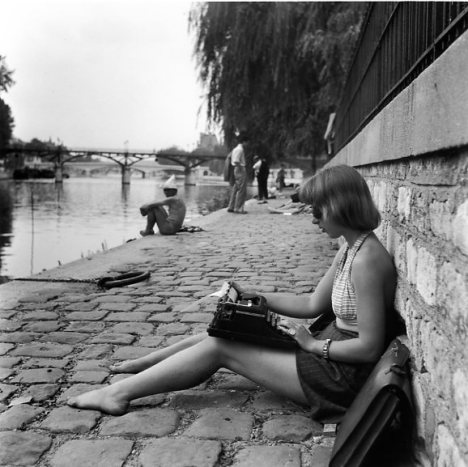
La dactylo du Vert Galant
1947

La diagonale des marches
1953

Le nez au carreau
1953

Les petits enfants au lait
1934

Trois petits enfants blancs
1971

Wednesday, March 7, 2012

Alessandro Manzoni

Google Italia's cover illustration is dedicated to Italian writer Alessandro Manzoni, on his 277th birthday. Manzoni was born in Milano on the 7 March 1785 and lived until 22 May 1873. The image depicts characters from his work, I promessi sposi, 'The Betrothed'. Published in 1827, it was Italy's first historical novel and remains one of the most famous and widely-read Italian books. Set in Northern Italy in 1628, when the country was under the oppressive power of Spain, it symbolises the Risorgimento, with its patriotism and its part in the unification of the Italian language.